Cuba: Day 1
The second in a series on my trip to Cuba 1 year ago.


Friday 12/6
As luck would have it, the dogs didn’t wake me up. I got up at 7 to catch the airport shuttle at 7:45. I brushed my teeth and went to the lobby to check out. I wandered the lobby and breakfast room with my suitcase. The TV’s in the breakfast room were showing local tourist attractions. I popped a few mini donuts while I waited, of both the powdered sugar and chocolate-coated variety. The shuttle was on time and stopped at a few other hotels before depositing us at our respective airport terminals. (I believe the George H.W. Bush Intercontinental Airport has 5 terminals, and a 6th has been under construction for the last 3 years, according to a conversation I overheard.)
This was when the fun really began, because it was a real pain trying to figure out where the check-in for Cuba flights was. I went up and down the escalators and stairs multiple times before I found it. The United Airlines’ Cuba counter had 2 people to explain how to apply for the visa on your phone. (I don’t know what they tell people who don’t have smartphones.) I was already stressed out, so typing the long visa number on my phone brought me to the verge of tears. The sugar in the mini donuts surely fueled my anxiety.
Eventually, I completed the form and bought my visa for $85. Thankfully, on the flight I caught a break. A flight attendant randomly upgraded me from the back row to first class, my first time in that rarefied air. The extra elbow room and leg space eased my anxiety. We got a decent lunch, but nothing super-fancy, although the quinoa salad was quite good.
The descent into Cuba revealed a predictably tropical, lush, hilly landscape. The human presence appeared limited. The technology was stunted, as if frozen in time around 1959 (the year of the Revolution). The airport was small, with a tarmac surrounded by palm trees. It’s about the size of the airport I’d expect to see in Des Moines or Omaha, with only a handful of gates.
I was kinda surprised the flight attendant’s first greeting to Havana (and the first greeting of the flight) was in Spanish and the second in English. But I remembered that, linguistically speaking, I was now on the outside looking in. Luckily, I still had the 28-year-old remnants of 4 years of high school Spanish to fall back on, so I wasn’t at a total loss.
We entered the terminal through the jet bridge and walked down an aisle that was separated from the rest of the terminal by glass. This led to customs, where my rusty Spanish helped me muddle through. They scanned the visa QR code on my phone. Some of the customs officials were seated at tables wearing white nurses’ uniforms and face masks. They were the ones who scanned my visa before passing me onto the next customs line. That was where they looked at my passport.
The next step was security. We had to put our belongings through another X-ray machine. It took a while to get through this stage in the process, enough time for my nerves to build up. We were in a pair of nebulous lines, which made me anxious about not butting ahead of anyone, but also worried about someone cutting in front of me. I also had to adjust to the lack of personal space.
One guy gestured for me to go ahead of him, which helped relieve my anxiety. I offered him a timid “gracias.” Eventually, I made it through this emotional ordeal (without having to take off my shoes!) and proceeded to the baggage claim. I greatly appreciated having all the airport signs in English (as well as Spanish). The signs looked identical to those in the US. (Is that the global standard?)
It took a while for our suitcases to show up on the carousel, which was nearly identical to those in the US. Except for the size and maybe some grime, the airport was nearly identical to its US counterparts. After maybe 20 minutes of waiting, I got my suitcase and headed for the door. I waved at the man holding the “Witness for Peace” sign. We shook hands and he identified himself, although I don’t think I caught his name the first time. I was too nervous.
This was Reynier (pronounced like the mountain in Washington state), our delegation coordinator. We later learned his mother named him after a popular soap opera character, as many other Cubans did at the time. As a result, there are quite a few Reynier’s on the island.
He led me across the street where our bus was parked. Our bus driver, Chino, loaded my suitcase in the bus’s cargo hold (or whatever you call that). I boarded and was greeted by Natalia (or “Nati”), one of the 2 Witness for Peace Solidarity Collective (WFPSC) Cuba International Team members. There were other delegates on board, so I got to meet them as well (although I honestly can’t remember which other delegates were on the bus). We waited for the last person to show and then headed into Havana.
I was immediately struck by the poverty. The building facades were in a state of decay that exceeded what I’d seen on my previous WFPSC delegations to Honduras and Oaxaca. There were also many people along the roads looking for rides. It would be more accurate to call hitchhiking Cuba’s national sport rather than baseball. (Also, at no point in the 10 days did I see anyone play baseball. Only soccer.)
The roads were in rough shape too. Potholes were pervasive and made me long for Minnesota roads in the spring. The bus driver expertly negotiated many tight fits and close calls with aplomb and no apparent anxiety.

After maybe a half-hour we pulled up to our home in Havana, the Centro Martin Luther King, Jr. (CMLK). It’s next to Ebenezer Baptist Church, fittingly. (Ebenezer Baptist Church was MLK’s home church in Atlanta.) We entered a gate off the sidewalk and followed a narrow lane past lovely botanical displays and art depicting MLK. Then we passed through the Centro’s reception area, an immaculately clean room.

Thence we emerged into the courtyard, which was walled off by 2- or 3-story buildings on all 4 sides. We climbed an exterior staircase to the 2nd floor of one building to find our rooms. I got a room to myself for the first 3 nights. The person I was supposed to be sharing the room with missed his flight due to trouble getting his visa at the airport. Considering how much trouble I had negotiating that clerical tightrope, I wasn’t shocked.
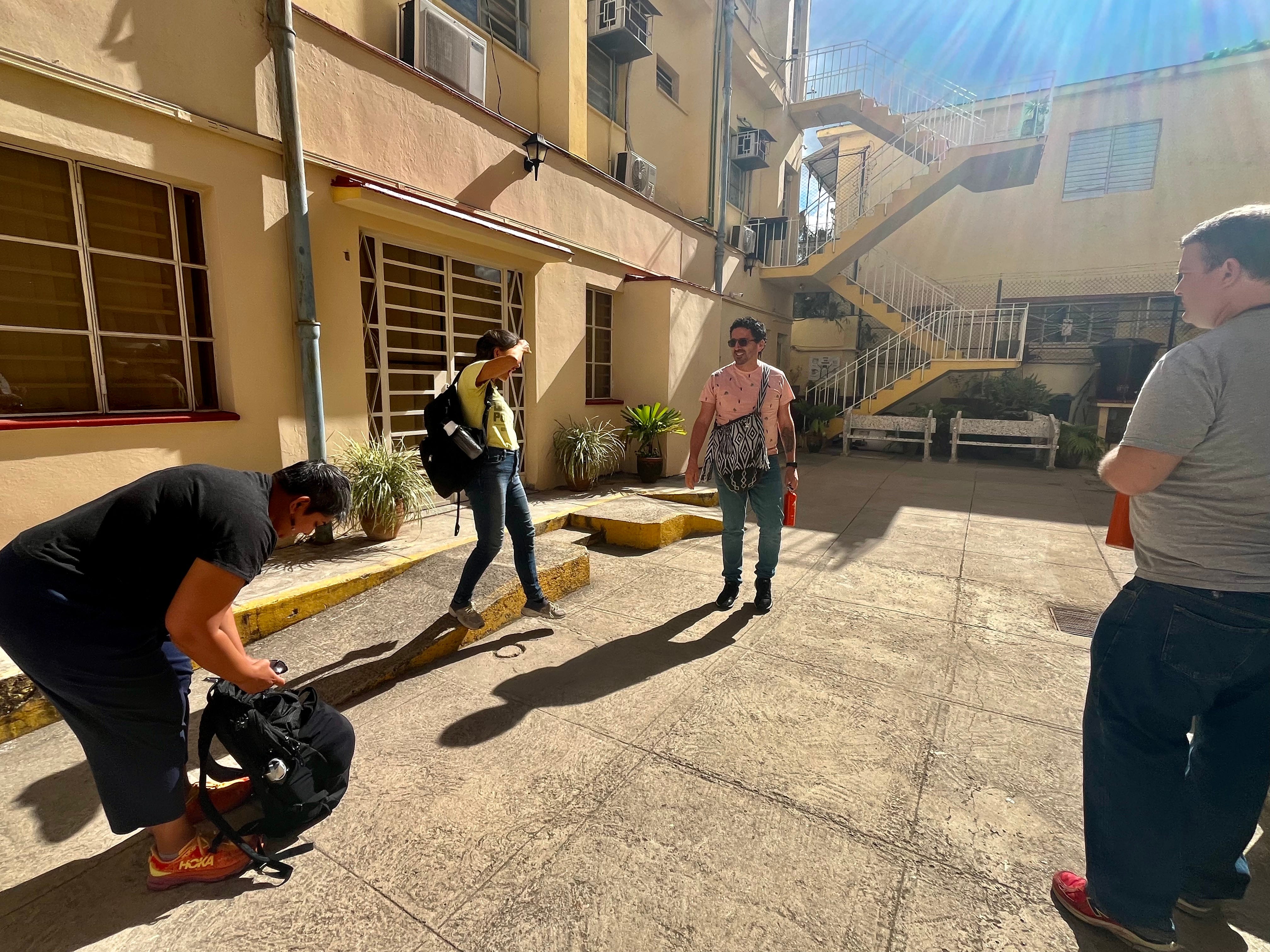
The room was small; 2 bunkbeds took up most of the space. But it came with its own bathroom and shower and (most impressively and welcome for me) an air conditioner. The A/C resembled units I’d seen in a nice Airbnb my family had stayed at a few years before in Connecticut.
We convened our first meeting at 5:30pm on the terrace on the 2nd floor of one of the other buildings surrounding the courtyard. All 6 of us were from the Twin Cities, something I hadn’t realized going in. That made for some common ground, which was nice. But most of us hadn’t grown up in Minnesota, so we still had a diversity of backgrounds.
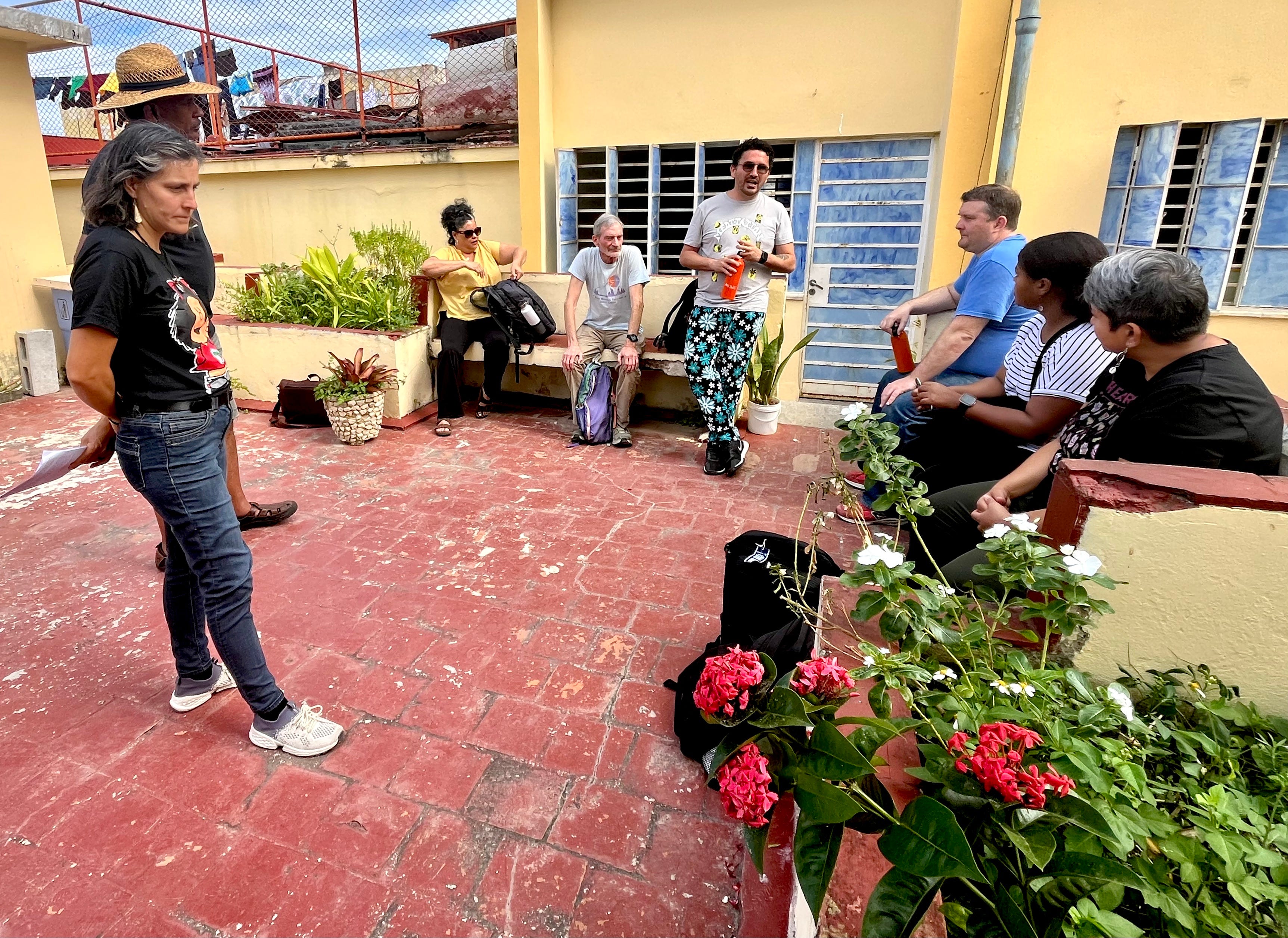
I was the odd man out. Everyone else seemed to know each other. But I made sure to open up when we went around the circle talking about ourselves. I let them know that my reserved demeanor masks a roiling cauldron of emotions. (I didn’t put it like that, but in so many words of a more restrained variety.) I didn’t want to make the delegation about me. (Just like I don’t want to make this series of blog posts primarily about me.)
But I felt it was necessary to put that out there, precisely so I could get over my personal hang-ups and experience Cuba as directly as possible. I’ve often felt that I put myself at the center of my experience on my 2 previous Witness for Peace Solidarity Collective (WFPSC) delegations to Honduras and Oaxaca. My hope on this delegation was to avoid that and put Cuba and the Cuban people firmly at the center of my focus (and this blog).
The meeting was followed by dinner, our first of many meals at the Centro’s cafeteria. The cafeteria was right off the courtyard on the first floor of the same building as our lodgings. We sat down at tables full of simple, white plates, cups, saucers and bowls, with the food already sitting in the middle of the tables on large plates or bowls.
Over the course of our week there, we eagerly chowed down on rice, chicken, pork, eggs, beets, salads, lettuce, cucumber slices and chicken noodle soup, among other delicious dishes. I was afraid of gaining weight, but, when I weighed myself after returning home, I’d somehow lost 10 lbs.
We learned that Cubans are virtually allergic to spice, another reminder to me that Latin America is not a monolith. I doubt the food would’ve upset any stomachs at one of the church potlucks in rural Iowa where my mom grew up, and that’s about as far from spicy as you can get on the culinary map.
After dinner, we took our bus to Revolution Square to learn a bit about the Revolution and José Martí, the Father of the Nation. Our translator, Edelso, explained that Fulgencio Batista (the dictator overthrown by the Revolution) wanted to put the statue of Martí at the top of a tower. The people wanted the statue on the ground, so they compromised. Batista got his tower, but the statue was placed in front of it rather than on top.
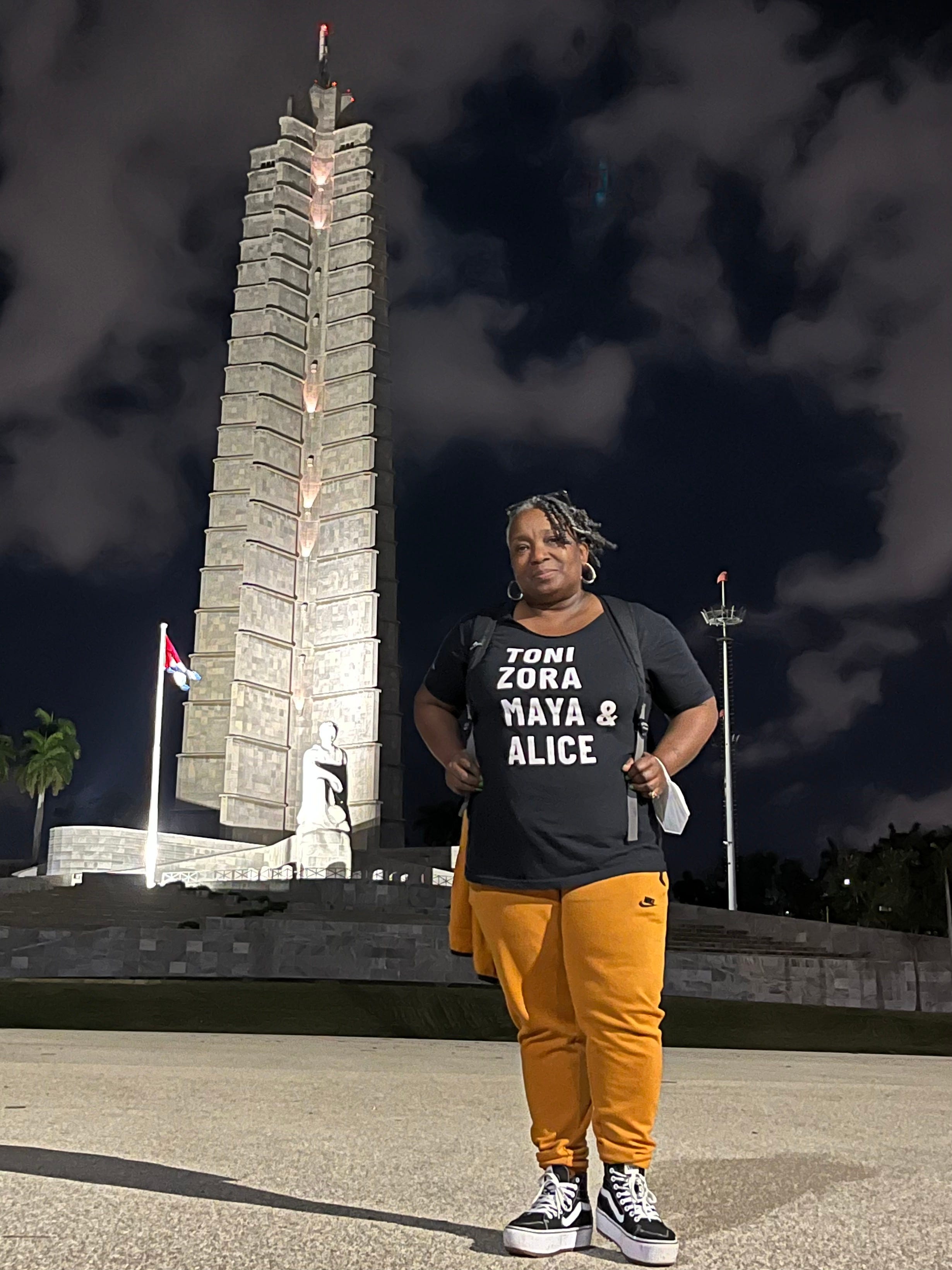
Surrounding Revolution Square are buildings with pictures of 2 heroes of the Revolution alongside their famous quotes. The picture of Che Guevara is accompanied by his slogan, “Hasta la victoria siempre.” The other picture shows Camilo Cienfuegos expressing support for Fidel: “Vas bien, Fidel.”

We learned that, in his will, Fidel Castro forbade the construction of any statues of himself or even the naming of anything after him. From a US perspective, this struck me as absurdly humble. (What US president would make such a request? Even if they did, most of the country would laugh at their ego, to think that they warranted a statue. But, as Harry Truman once said, “A statesman is a politician who’s been dead 10 or 15 years.” Given enough time, we might be dumb enough to build statues and name things after Biden or Trump. Just look at the canonization of Reagan, even among some Democrats.)

It’s hard to swallow such information after hearing mainstream US media demonize Fidel for most of my life. I also don’t wanna flip from demonizing to idolizing him. I’d rather humanize him first. Then maybe I can figure out what kind of person he was.
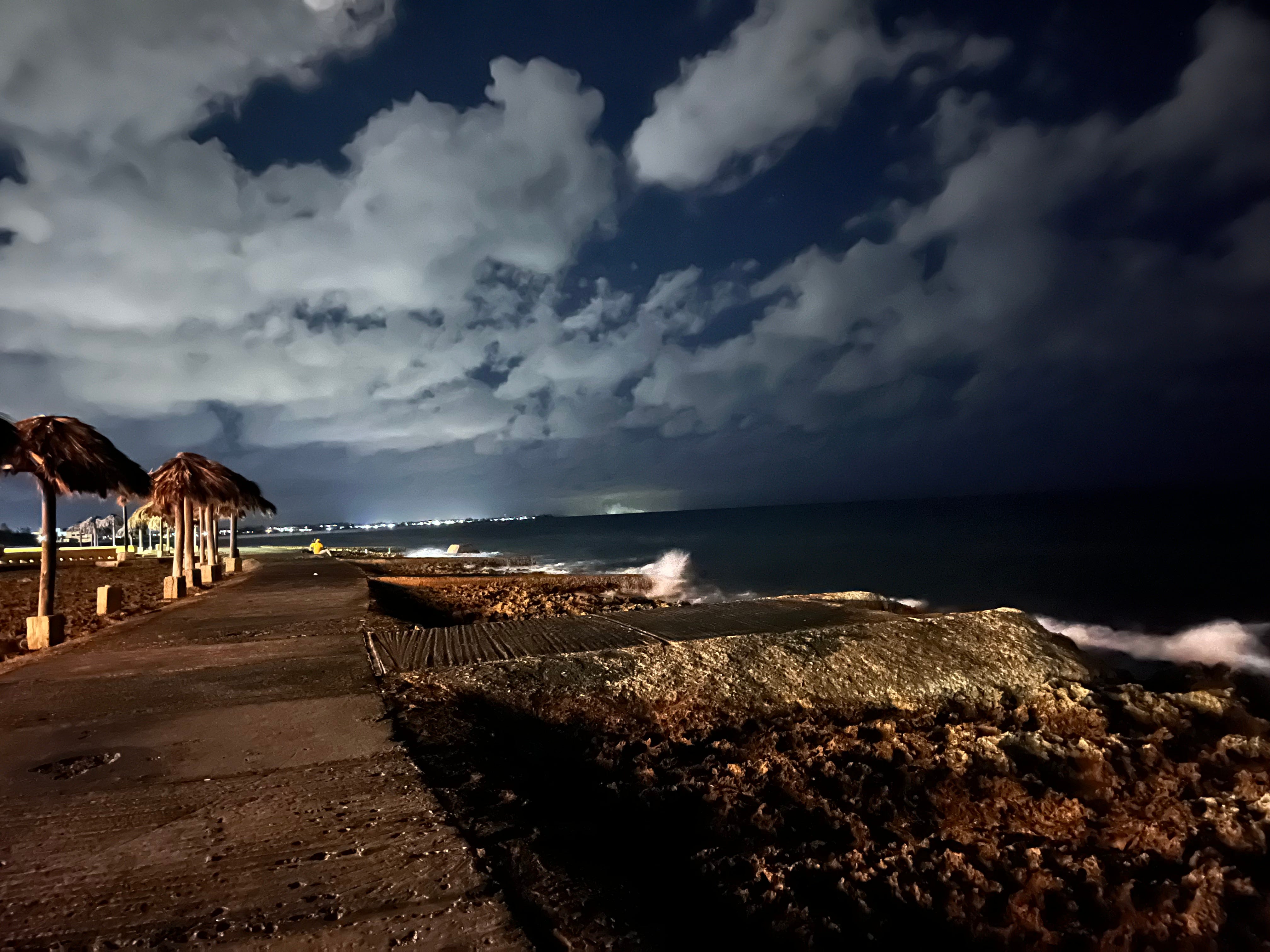
From Revolution Square we drove to the beach and took a bunch of pictures along the shore. There was a bar nearby where we hung out for a while, drinking mojitos and other similar drinks. I quickly tired of it though, because the music from the DJ stage made conversation nearly impossible.
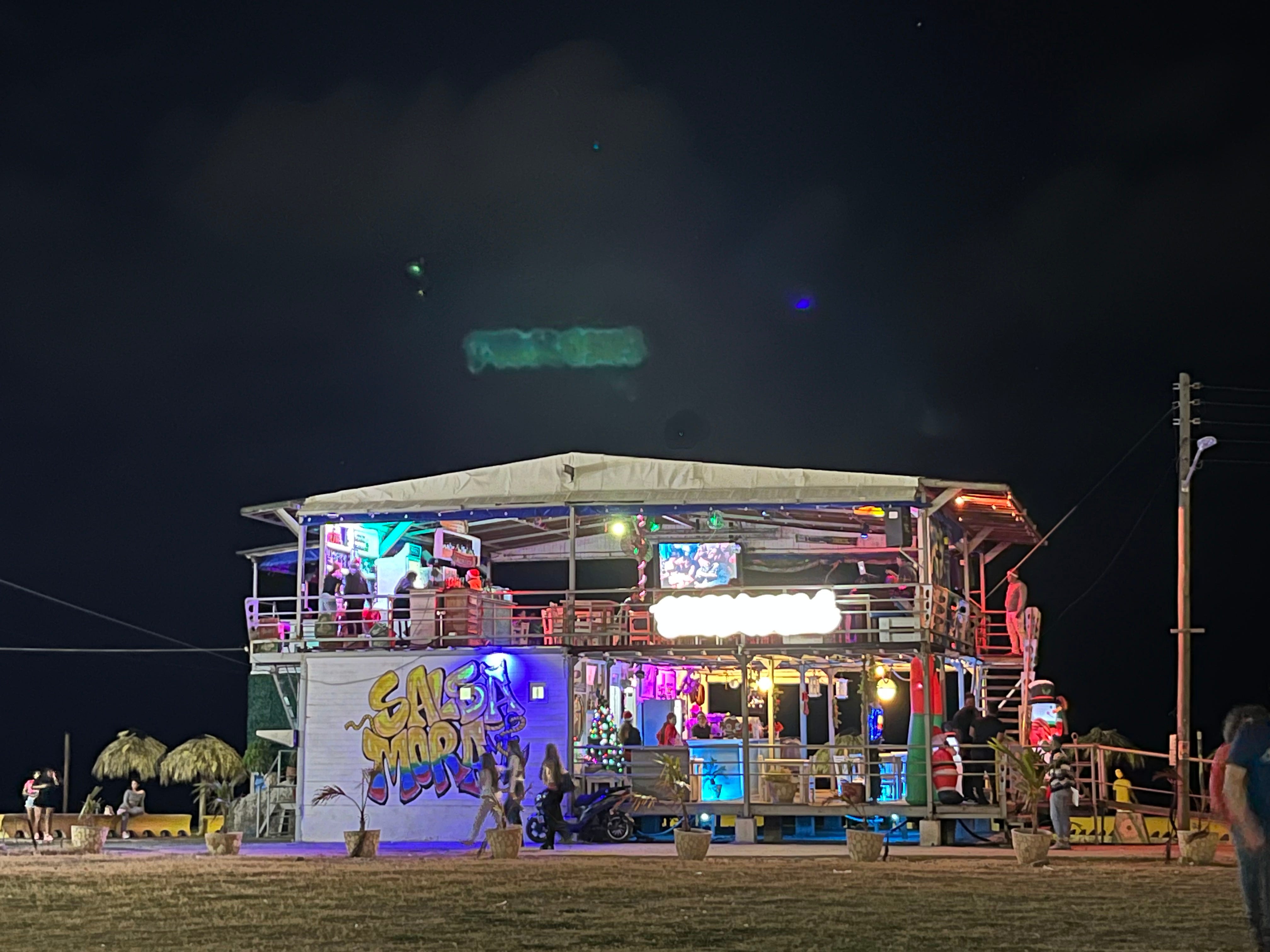
One thing I like about getting old (or middle-aged) is not feeling like I have to go to places like that anymore. I mostly watched the music videos playing on the TV’s around the establishment. That was honestly pretty entertaining given all the attractive women featured in the videos.
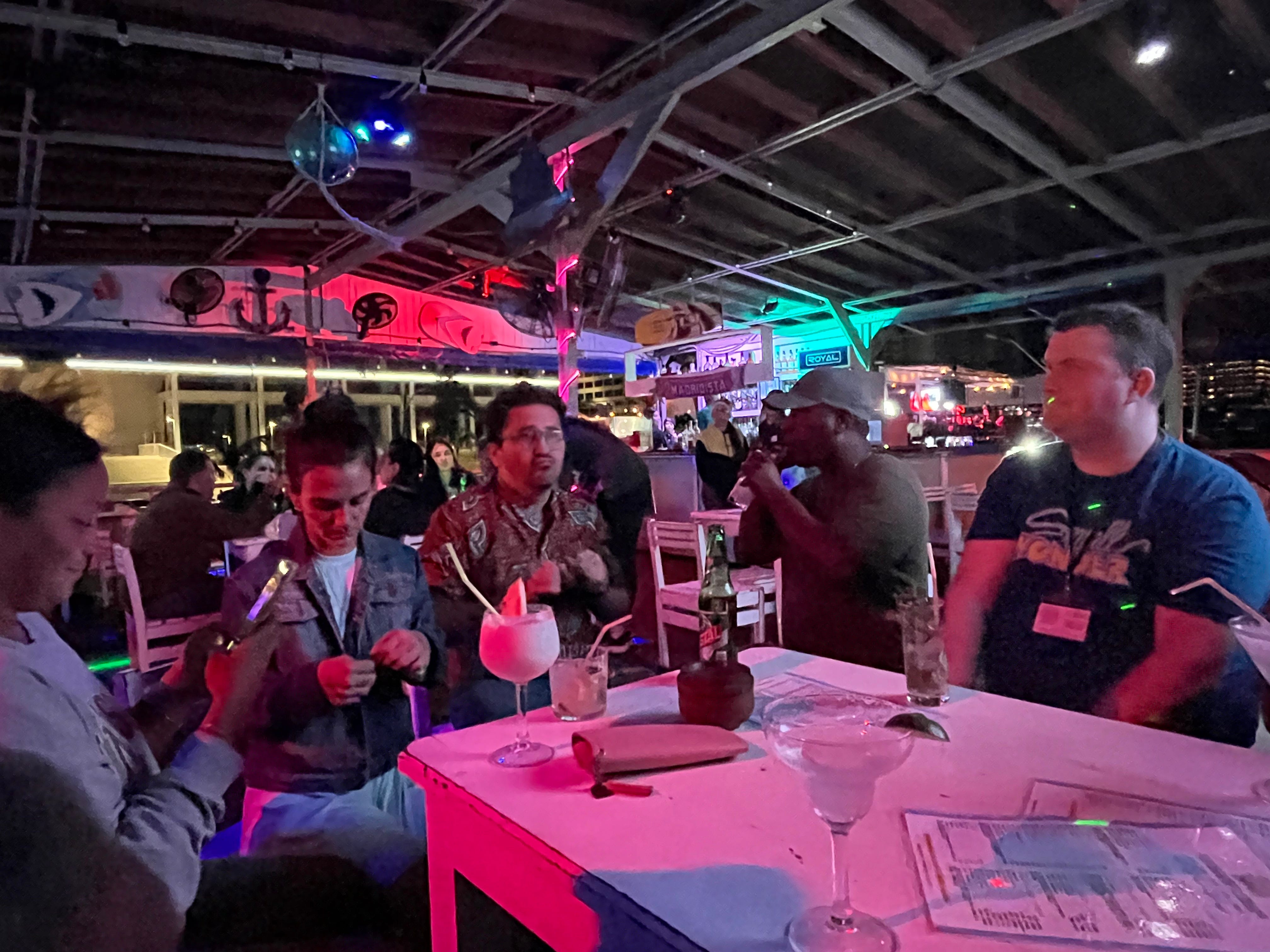
I was surprised to see those videos and hear that music in Cuba. They were the same as what I’d expect to see and hear in the rest of Latin America and in pretty much any Hispanic bar in the US. I’d assumed the US embargo would restrict Cuban access to that kind of commercial culture.
Without warning, Reynier grabbed one of the women from the Centro Martin Luther King (CMLK) who’d joined us and twirled her around quite expertly (if a bit roughly) in what appeared to be a salsa dance.
Despite Nati’s urging, I couldn’t bring myself to stand up and dance. I hadn’t really danced in a decade. Actually, the last time might’ve been on the Honduras delegation. That didn’t go so well, so I’ve been even more reluctant to cut a rug since then, and I was already hesitant to dance in public.
I really just wanted to go to bed at that point. It had been a long day, and the emotional labor I was doing to keep my shit together (i.e., be polite) in a strange land surrounded by strangers was exhausting. It was only 10pm when we headed back to the CMLK, but it felt much later.
We drove through what had been a wealthy neighborhood before the Revolution. The mansions are now embassies.
I took a shower once I got back to my room. The water actually got hot after a few minutes, so I had no complaints there. During the trip I often meditated before bed in order to relax enough to fall asleep. I turned on the A/C and set it at 23 or 24ºC. The room was soon cool enough even for my Minnesota blood.
We’d been warned about recent blackouts and frequent electrical outages, but there were no (unplanned) outages during our delegation. The daytime highs were in the 70’s and 80’s, so A/C was extremely helpful at night.
I read some of the book I’d brought, Cloud Cuckoo Land, a recent fiction bestseller, before turning out the light around midnight.